

 +44 (0)333 202 6800
Buying Guide: Recycled Plastic Fencing for Contractors
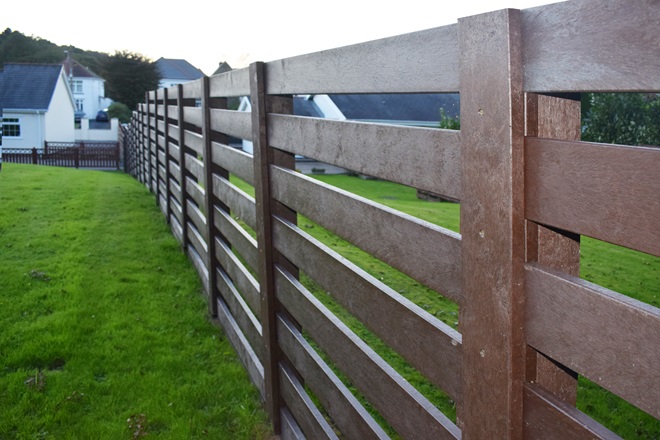
Why contractors are moving away from traditional timber fencing
For contractors, fencing projects are rarely just about installation. Long‑term performance, callbacks, maintenance demands, durability and lifecycle cost all influence product selection – especially across commercial, equine, agricultural, leisure and conservation environments.
Traditional timber fencing continues to present familiar challenges:
- Rot and moisture damage
- Splintering and cracking
- Frequent repainting or staining
- Warping in exposed environments
- High maintenance costs
- Premature replacement cycles
- Safety concerns from degraded posts and rails
These issues are amplified in exposed or high‑moisture locations such as:
- Holiday parks
- Public open spaces
- Wetland and coastal areas
- Equine facilities
- Nature reserves
- Schools and parks
- Commercial landscapes
As a result, more contractors are specifying recycled plastic fencing systems for long‑term outdoor performance and reduced maintenance interventions.
Why choose recycled plastic fencing?
Long-term rot resistance
Recycled plastic fencing does not absorb moisture, removing one of the primary causes of fencing deterioration. It is not affected by:
- Rot
- Fungal decay
- Water absorption
- Insect attack
- Splitting from moisture cycling
This makes it particularly effective in:
- Wet ground conditions
- Coastal locations
- Agricultural environments
- Woodland pathways
- Flood-prone sites
- Equine applications
For contractors, this reduces the likelihood of remedial work and warranty‑related issues.
Minimal maintenance requirements
Traditional timber fencing often requires:
- Annual staining
- Preservative treatments
- Replacement rails
- Surface sanding
- Frequent inspections
Recycled plastic fencing removes much of this ongoing maintenance burden. It does not require painting, staining or chemical treatment, helping clients reduce operational labour and maintenance scheduling.
This is especially valuable for:
- Local authorities
- Visitor attractions
- Schools
- Commercial estates
- Holiday parks
- Public realm projects
Improved lifespan and lifecycle value
Although recycled plastic fencing may have a higher initial installation cost than lower‑grade timber, contractors and procurement teams increasingly focus on total economic lifecycle value.
When maintenance, replacements, labour, coatings and downtime are considered, recycled plastic fencing can offer a more predictable long‑term cost profile – particularly where:
- Whole-life costing is required
- Long asset life is important
- Access for maintenance is limited
- Budget certainty is needed
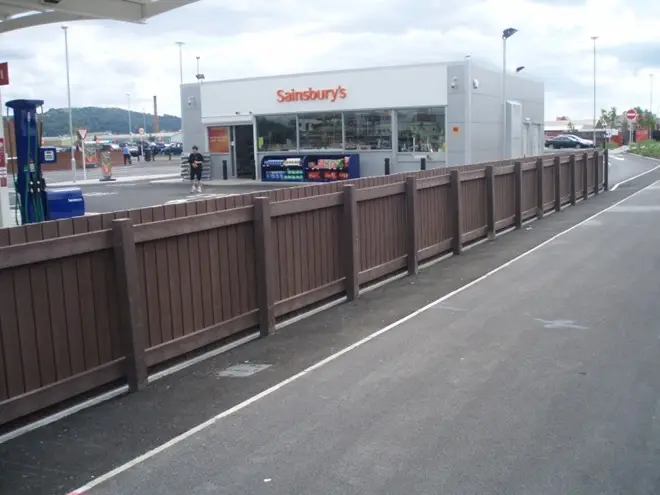
Popular recycled plastic fencing options
Birdsmouth fencing
Commonly used across:
- Nature reserves
- Coastal pathways
- Visitor attractions
- Parks
- Boardwalk approaches
- Conservation projects
Birdsmouth fencing provides a traditional timber‑style appearance with the durability of recycled plastic.
Key contractor benefits:
- Consistent manufactured finish
- No splintering
- Rot resistant in wet environments
- Suitable for public access areas
- Lower maintenance requirements
- Long-term durability
Birdsmouth fencing is often specified where aesthetics and environmental sensitivity are equally important.
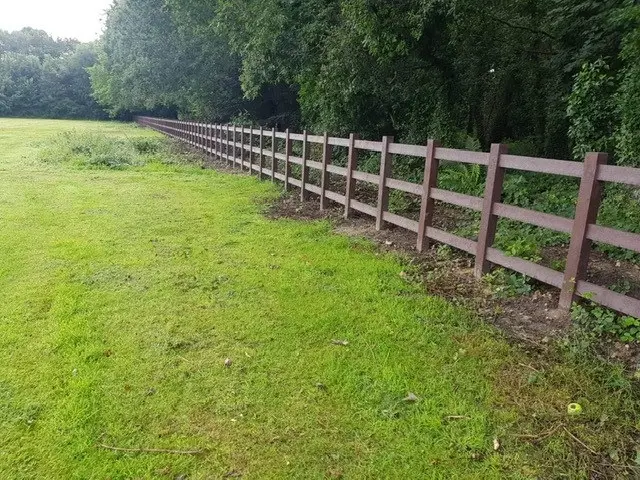
Post and rail fencing
A widely used solution for:
- Equine facilities
- Agricultural boundaries
- Rural pathways
- Commercial landscapes
- Leisure developments
Traditional timber post and rail systems frequently fail due to:
- Ground-level post rot
- Rail cracking
- Horse impact damage
- Ongoing replacement cycles
Recycled plastic alternatives provide a durable, low maintenance option.
Why contractors specify recycled plastic post and rail fencing:
- Resistant to moisture and mud exposure
- Safer splinter-free surfaces
- Strong structural performance
- Reduced long-term maintenance
- Improved lifespan in equine settings
- Suitable for harsh weather exposure
Picket fencing
Commonly used in:
- Schools
- Hospitality venues
- Play areas
- Public parks
- Visitor attractions
- Commercial landscaping schemes
Recycled plastic picket fencing provides the traditional appearance clients expect while reducing repainting and maintenance requirements.
Key advantages:
- Clean, consistent appearance
- No peeling paint
- No rot or splintering
- Easy to clean
- Suitable for high-footfall areas
- Long-lasting colour stability
Gates and access solutions
A fencing system is only as reliable as its access points. Recycled plastic gates offer a stable, low‑maintenance alternative to timber gates that may sag or warp over time.
Suitable for:
- Pedestrian access
- Equine paddocks
- Public pathways
- Nature reserves
- Commercial landscapes
- Park entrances
Contractor advantages:
- Stable material performance
- Reduced moisture movement
- Lower maintenance requirements
- Compatible system appearance
- Long-term reliability
- Ideal for conservation and environmentally sensitive projects
Recycled plastic fencing is often selected for conservation and outdoor projects where long‑term durability and reduced maintenance access are priorities.
Because it is manufactured using recycled plastic, it can support projects that specify or prefer materials with recycled content.
Suitable for:
- Nature reserves
- Wetland restoration
- Coastal infrastructure
- Heritage environments
- Public access routes
- Landscape projects with limited maintenance access
Sustainability considerations for commercial and public-sector projects
Many procurement frameworks include criteria relating to the use of materials with recycled content. Recycled plastic fencing can help meet these requirements while providing a durable, low‑maintenance solution.
It is particularly relevant for projects focused on:
- Long‑life infrastructure
- Reduced maintenance interventions
- Predictable lifecycle costs
Common contractor concerns about recycled plastic fencing
“Will it look too artificial?”
Modern recycled plastic fencing systems are designed to provide a more natural appearance than earlier‑generation plastic products, offering a consistent and traditional aesthetic.
“Is it strong enough?”
Commercial‑grade recycled plastic fencing is engineered for outdoor structural use. As with any fencing system, correct specification and installation are essential
“What about installation?”
Recycled plastic fencing is installed using familiar methods similar to traditional systems, meaning:
- Minimal learning curve
- Standard installation processes
- Compatibility with existing workflows
- Straightforward transition from timber systems
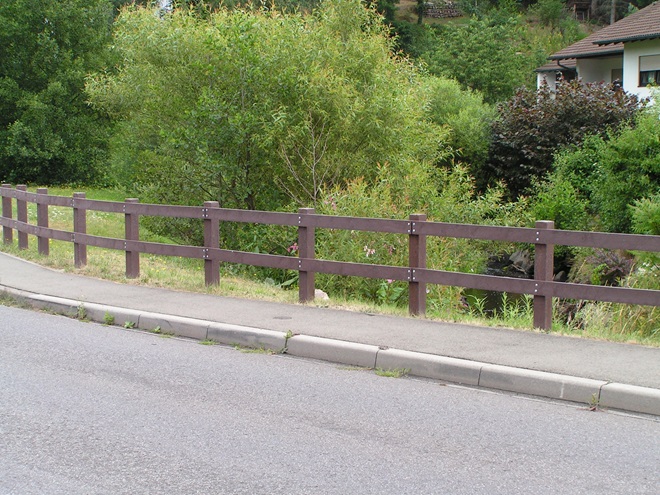
Why contractors are increasingly specifying recycled plastic fencing
Contractors are under pressure to deliver:
- Longer-lasting installations
- Lower maintenance assets
- Solutions incorporating recycled materials
- Better lifecycle value
- Safer public environments
- Reliable performance in harsh conditions
Recycled plastic fencing supports these priorities by offering durable, low‑maintenance performance across a wide range of environments..
Related Solutions - Links
Need more information?
Our team is here to help you find the solution. Get in touch and we'll answer your questions.
