

 +44 (0)333 202 6800
Choosing Materials for Wetland & Waterside Projects
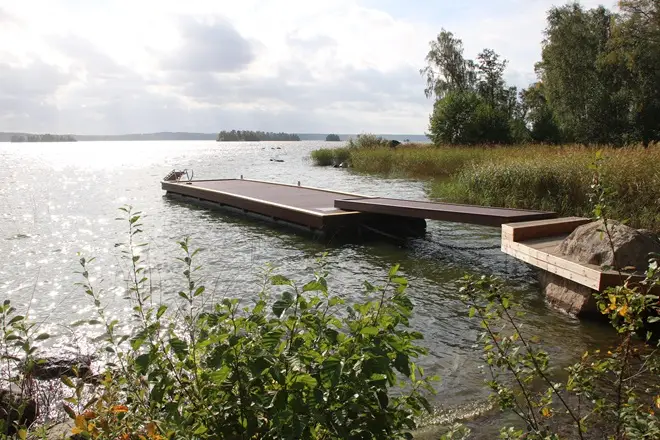
Wetlands, ponds, lakes, rivers, nature reserves and other waterside environments create some of the most demanding conditions for outdoor construction materials.
Persistent moisture, fluctuating water levels, damp ground, vegetation and limited maintenance access can all accelerate deterioration. At the same time, many of these locations are environmentally sensitive, making repeated maintenance and replacement work particularly undesirable.
For landscape architects, contractors, local authorities, environmental organisations and landowners, choosing suitable wetland construction materials therefore requires more than considering the initial installation.
Materials need to be selected according to how they will perform in prolonged wet conditions, how much maintenance they will require and how future intervention could affect the surrounding environment.
This guide examines the main considerations when selecting materials for boardwalks, viewing platforms, access routes and other waterside infrastructure.
Why are wetland environments so challenging?
Water fundamentally changes the demands placed on external structures.
A conventional outdoor installation may periodically get wet before drying. In a wetland or waterside location, components can remain damp for prolonged periods or experience direct contact with water and saturated ground.
Conditions can include:
- Persistent moisture
- Direct water contact
- Saturated or waterlogged ground
- Seasonal flooding
- Changing water levels
- Restricted airflow
- Mud and organic material
- Algae growth
- Dense surrounding vegetation
- Difficult maintenance access
Structures may also need to accommodate significant pedestrian traffic while remaining sympathetic to the natural environment.
Material selection consequently has implications for both structural longevity and long-term site management.
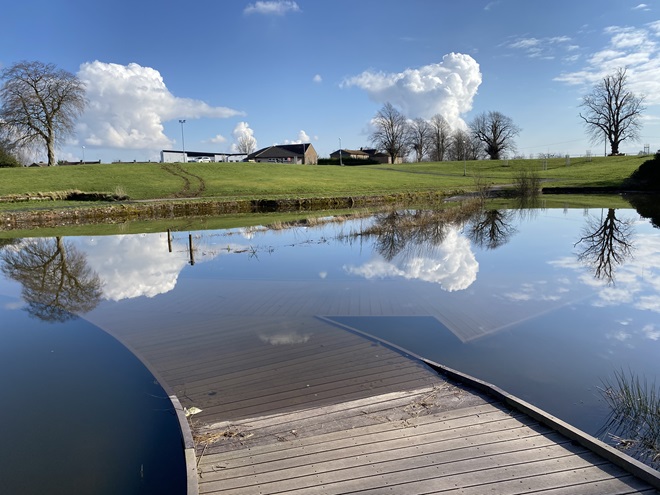
Start with the conditions of the individual site
No two waterside projects are identical.
Before specifying materials, establish exactly where and how each component will be used.
Consider:
- Will it be permanently submerged?
- Will it experience intermittent water contact?
- Will it be installed directly into wet ground?
- Is flooding likely?
- Is the water fresh, brackish or salt water?
- How exposed is the site?
- How much pedestrian traffic is expected?
- Is wheelchair or pushchair access required?
- Will maintenance vehicles be able to reach the installation?
- Is the surrounding habitat particularly sensitive?
- How easily could individual components be replaced?
A boardwalk crossing a seasonally wet area, for example, may have very different requirements from a viewing platform positioned alongside a lake.
Understanding these conditions allows materials to be assessed against the actual project rather than simply being classified as suitable for general outdoor use.
The problem with moisture and traditional materials
Timber has traditionally been widely used for boardwalks and other outdoor structures because it is familiar, readily workable and visually appropriate for natural environments.
However, prolonged moisture exposure presents challenges.
When timber remains damp, deterioration and decay can eventually affect structural components. Particularly vulnerable areas can include:
- Ground-contact posts
- Supporting joists
- Bearers
- Fixing points
- Areas with restricted airflow
- Components close to the waterline
Timber used externally may also require preservative treatment depending on its specification and application.
Metals introduce different considerations, particularly corrosion and the suitability of individual grades or coatings for the environment.
This does not mean conventional materials cannot be used successfully. It does mean environmental exposure and future maintenance need to be considered carefully during specification.
Why consider recycled plastic in wet environments?
Recycled plastic has characteristics that make it particularly useful in environments where water and moisture are unavoidable.
Plaswood recycled plastic:
- Does not rot
- Does not absorb water like timber
- Does not splinter
- Requires no painting or staining
- Does not require preservative treatment
- Can be used in direct contact with wet ground
- Is suitable for a range of waterside applications
These characteristics allow recycled plastic to address one of the fundamental challenges associated with wetland construction: the relationship between material deterioration and persistent moisture.
Rather than trying to prevent the material from getting wet, a material can be selected that is inherently suited to exposure to moisture.
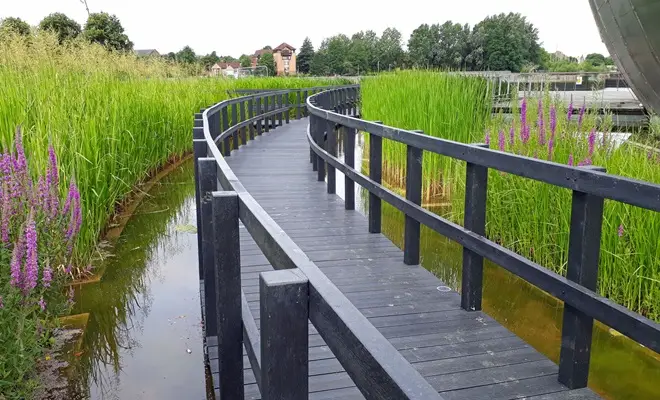
Boardwalks and public access routes
Boardwalks enable people to access environments that might otherwise be difficult or damaging to cross.
They can provide routes through:
- Wetlands
- Nature reserves
- Woodland
- Marshland
- Lakeside environments
- Riversides
- Ponds
- Country parks
They can also help direct visitors along defined routes, potentially reducing trampling and disturbance of the surrounding ground.
For designers and contractors, a boardwalk needs to provide a practical public-access solution while dealing with the environmental conditions beneath it.
Important specification considerations include:
- Supporting structure
- Decking material
- Surface characteristics
- Width
- Accessibility
- Edge protection where required
- Fixing methods
- Expected loading
- Changes in ground or water level
- Maintenance access
Material selection should therefore consider the complete structure rather than simply the visible walking surface.
Don't overlook the boardwalk substructure
A boardwalk can appear perfectly serviceable from above while deterioration is occurring underneath.
Joists, bearers, posts and other supporting components can experience particularly challenging conditions because they are closer to water, vegetation and damp ground and may receive less airflow.
Access for inspection or replacement can also be difficult once the structure has been completed.
Using rot-resistant materials within the substructure can therefore be particularly valuable.
Plaswood recycled plastic lumber profiles can be used for appropriate structural and supporting applications, providing a material that does not rot as a consequence of persistent moisture exposure.
This can reduce one of the potential failure points associated with conventional timber structures in wet environments.
Viewing platforms and observation areas
Viewing platforms provide access to landscapes and wildlife while helping visitors remain within designated areas.
They may be installed alongside:
- Lakes
- Wildlife ponds
- Bird reserves
- Wetlands
- Rivers
- Coastal habitats
Like boardwalks, these structures can experience prolonged moisture exposure while also carrying groups of visitors who may remain in one location for extended periods.
Specifications may therefore need to consider:
- Structural loading
- Accessibility
- Guarding
- Seating
- Surface performance
- Substructure durability
- Fixing requirements
- Maintenance access
Where the platform extends above or close to water, selecting materials that are resistant to rot can help reduce deterioration associated with the environment.
Recycled plastic can potentially be incorporated into decking, supporting structures, seating and other appropriate components.
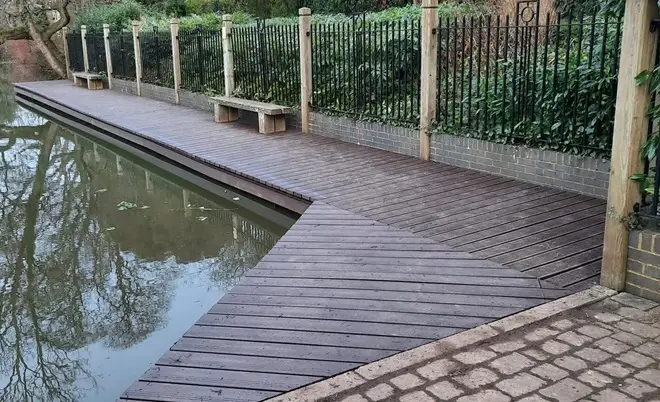
Retaining and ground-contact applications
Waterside landscaping can also require structures that are not immediately visible as part of the visitor infrastructure.
Recycled plastic lumber can be considered for appropriate applications involving direct contact with wet ground, including:
- Landscape edging
- Retaining elements
- Raised beds
- Pathway boundaries
- Posts
- Ground-level landscape structures
These are precisely the locations where moisture exposure can create problems for timber.
For contractors, using a rot-resistant material can be particularly useful where a component will become difficult to replace once planting has matured or surrounding landscaping has been completed.
Fencing, barriers and route management
Managing visitor movement can be important within sensitive natural environments.
Fencing and barriers can help:
- Keep visitors on designated routes
- Protect habitat areas
- Define site boundaries
- Separate visitors from water
- Protect newly established planting
- Direct people towards appropriate access points
Posts installed into damp ground can represent a vulnerable point in conventional fencing systems.
Recycled plastic fencing and posts provide a rot-resistant alternative for appropriate applications and do not require painting or preservative treatment.
Different fencing designs can also be considered according to whether the primary requirement is functional separation, visitor guidance or integration with the surrounding landscape.
Seating and rest points
Accessible natural environments need places where visitors can stop and rest.
Benches and picnic tables can be positioned at:
- Viewing points
- Trail intersections
- Rest areas
- Visitor facilities
- Picnic areas
- Waterside locations
Furniture installed in these environments faces the same moisture challenges as the wider infrastructure.
Recycled plastic benches and picnic tables do not rot or splinter and require no painting or staining, making them particularly relevant for locations where regular furniture maintenance would be difficult.
Accessibility should also be incorporated into the wider route design, with appropriate seating positions and wheelchair-accessible furniture considered where required.
Signage and wayfinding
Signs play several roles within wetlands and nature reserves.
They may provide:
- Directional information
- Trail markers
- Wildlife information
- Interpretation
- Safety information
- Site rules
- Educational content
Signage infrastructure is exposed to the same conditions as everything else on site.
Recycled plastic can be used for appropriate signage applications, providing a durable material for posts, boards and wayfinding elements without the rot concerns associated with timber.
This also provides an opportunity to create consistent infrastructure across boardwalks, furniture, fencing and signage.
Consider how maintenance affects sensitive environments
Maintenance has a cost beyond labour and materials in a wetland environment.
Every intervention can potentially require:
- Workers entering sensitive areas
- Tools and machinery being brought onto site
- Temporary closure of visitor routes
- Vegetation being disturbed
- Components being transported through difficult terrain
- Removal of deteriorated materials
Reducing maintenance requirements can therefore provide an operational advantage beyond financial savings.
This makes the service requirements of the material particularly important.
A component that does not require regular painting, staining or preservative treatment can reduce the number of interventions needed during its service life.
Likewise, reducing deterioration associated with rot can potentially reduce the frequency with which components need repair or replacement.
Think about access before construction begins
Remote environments can make apparently straightforward repairs surprisingly difficult.
Before finalising a specification, consider how the installation could be accessed in the future.
Ask:
- Can vehicles reach the structure?
- Would materials need to be carried manually?
- Is access seasonal?
- Could high water levels prevent maintenance?
- Would a boardwalk need to close during repairs?
- Could maintenance disturb wildlife?
- Would established vegetation make access more difficult in future?
The harder an installation will be to maintain, the greater the value of specifying materials that minimise recurring maintenance requirements.
Accessibility in wetland and waterside projects
Natural environments can present particular accessibility challenges, but good design can enable more people to experience them.
Where appropriate for the site, public-access infrastructure should consider:
- Boardwalk width
- Passing places
- Gradients
- Rest points
- Wheelchair-accessible picnic tables
- Appropriate seating
- Turning spaces
- Transitions between surfaces
- Barriers and edge protection
Material selection forms only one part of accessible design. The route needs to be considered as a complete journey from the point of arrival through the natural environment.
Project-specific accessibility requirements and relevant standards should therefore be considered during professional design.
Material selection and environmental considerations
Environmental projects naturally attract scrutiny around material choice.
When comparing options, it can be useful to assess several factors rather than relying on a single environmental characteristic.
Consider:
- Source material
- Recycled content
- Expected service life
- Treatments required during use
- Maintenance frequency
- Replacement requirements
- Transportation
- Manufacturing location
- End-of-life options
Plaswood products are manufactured in the UK using recycled plastic, converting recycled material into products designed for long-term external applications.
Recycled plastic also does not require the preservative treatments associated with some timber applications.
Where products are intended for environmentally sensitive locations, project teams should review relevant technical information against the specific requirements of the site.
Consider the complete system
One of the most important principles when designing waterside infrastructure is to avoid looking at components in isolation.
For a boardwalk, for example, consider:
Above the structure
- Walking surface
- Handrails or guarding
- Signage
Within the structure
- Joists
- Bearers
- Fixings
Below the structure
- Posts
- Foundations
- Ground conditions
- Water exposure
Around the structure
- Paths
- Fencing
- Seating
- Vegetation
- Visitor movement
The service life of the overall installation can be affected by its least durable critical component.
Selecting a long-lasting surface while overlooking a moisture-sensitive supporting structure may simply move the maintenance problem out of sight.
Wetland construction material checklist
Before selecting materials for a wetland or waterside project, establish:
- Water exposure: Will components experience occasional, prolonged or continuous moisture?
- Ground conditions: Will materials be installed into wet or waterlogged ground?
- Structure: Have both visible and supporting components been considered?
- Rot: Could biological deterioration affect the selected material?
- Corrosion: Are metals and fixings appropriate for the environment?
- Access: How will the structure be reached for future inspection and maintenance?
- Visitors: What level and type of use is expected?
- Accessibility: Have the needs of different visitors been incorporated?
- Surface: Is the walking surface appropriate for the environment and application?
- Maintenance: What recurring treatments or repairs will be required?
- Environment: Could maintenance activity disturb sensitive areas?
- Service life: How frequently are components likely to require replacement?
- Whole-life cost: Has future maintenance been considered alongside purchase and installation?
Building for long-term performance around water
Wetland and waterside projects demand materials that are appropriate for conditions where moisture is unavoidable.
The objective should not simply be to construct a boardwalk, viewing platform or access route that performs well when first installed. Designers and contractors need to consider how the entire structure will respond to its environment throughout its service life.
Where persistent moisture, wet ground, rot and difficult maintenance access are significant considerations, recycled plastic provides an alternative to traditional timber for a range of appropriate applications.
Plaswood manufactures recycled plastic lumber and finished products in the UK for use across boardwalks, landscaping, furniture, fencing and signage applications.
Explore our Wetlands & Woodlands solutions and recycled plastic lumber range, or contact the Plaswood team to discuss the material requirements of your wetland or waterside project.
Frequently Asked Questions
What materials can be used for wetland boardwalks?
A range of materials can be used depending on structural requirements, site conditions and project specifications, including appropriately specified timber, metals, composites and recycled plastic. Recycled plastic is particularly useful where resistance to rot and prolonged moisture exposure are priorities.
Does recycled plastic rot in wet conditions?
No. Plaswood recycled plastic does not rot as a consequence of exposure to water or damp ground, making it suitable for a range of appropriate wetland and waterside applications.
Can recycled plastic be used for boardwalk substructures?
Recycled plastic lumber profiles can be used for appropriate supporting and substructure applications. Structural requirements, spans, loading and the complete design should be established for the individual project.
Is recycled plastic suitable for viewing platforms?
It can be used for appropriate components within viewing platforms and similar waterside structures. The complete structure should be professionally specified according to anticipated loading, accessibility, guarding and site-specific requirements.
Does recycled plastic need preservative treatment around water?
Plaswood recycled plastic does not require painting, staining or preservative treatment to protect it from rot.
What other recycled plastic products can be used in nature reserves and wetlands?
Alongside boardwalk and structural applications, recycled plastic can be considered for appropriate benches, picnic tables, fencing, signage, edging and other landscape infrastructure, allowing several elements of a site to benefit from the same rot-resistant material characteristics.
Need more information?
Our team is here to help you find the solution. Get in touch and we'll answer your questions.
