

 +44 (0)333 202 6800
Cotswold Canal Bank Construction
Executive Summary
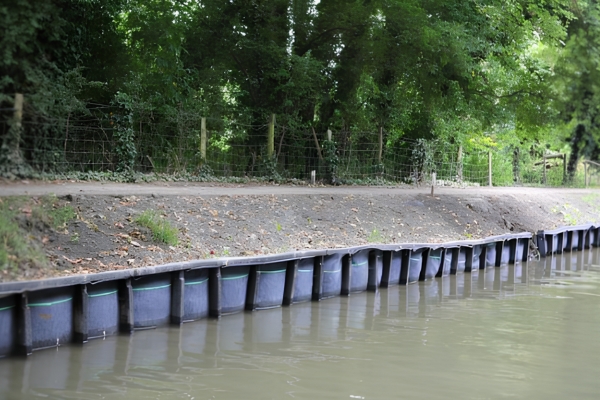
The Cotswold Canals Trust required a durable, low‑maintenance solution to stabilise a 500‑metre stretch of theRyefordCauseway Canal bank, where erosion from the fast‑flowing RiverFromewas threatening the historic towpath and canal channel.
Traditional materials such as timber and concrete were considered but presented challenges in terms of longevity, installation complexity and suitability for wet environments.
Working in partnership with Help for Heroes’ Heritage Heroes programme and supported by Amcor, the Trust selected Plaswood recycled‑plastic posts* to rebuild and reinforce the canal bank.
The result: a robust, long‑life revetment system designed to support ongoing restoration of the Stroudwater Navigation while providing hands‑on heritage skills training for veterans.

About the Client
The Cotswold Canals Trust is a volunteer‑led charity dedicated to restoring the Stroudwater Navigation and Thames & Severn Canal— a 36‑mile waterway linking the River Severn and the River Thames.
The Trust works with local authorities, engineers, heritage specialists and community partners to preserve historic infrastructure, improve public access and protect the canal corridor for future generations.
With sections of the canal over 200 years old, the Trust requires materials that perform reliably in wet, high‑wear environments and support long‑term restoration objectives.
The Challenge
TheRyefordCauseway section of the canal faced several critical issues:
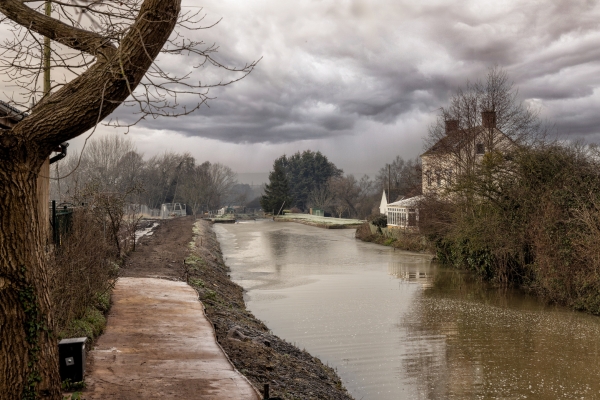
- River Frome erosion was encroaching on the narrow causeway separating the river from the canal.
- Towpath collapse was a significant risk if the erosion continued unchecked.
- Heritage structures, includingRyefordWharf, required sensitive restoration.
- Major infrastructure works— including new locks, bridges and channel excavation — were underway across the wider canal corridor.
The Trust needed a solution that would stabilise the bank, protect the towpath and integrate effectively with the historic environment.
The Solution
The Trust partnered with Help for Heroes’ Heritage Heroes programme, enabling veterans to work alongside skilled volunteers from the Canal & River Trust while gaining heritage‑construction experience.
Plaswood recycled‑plastic posts* were selected for the bank reconstruction due to their suitability for wet environments and consistent performance in revetment and embankment applications.
The installation process included:
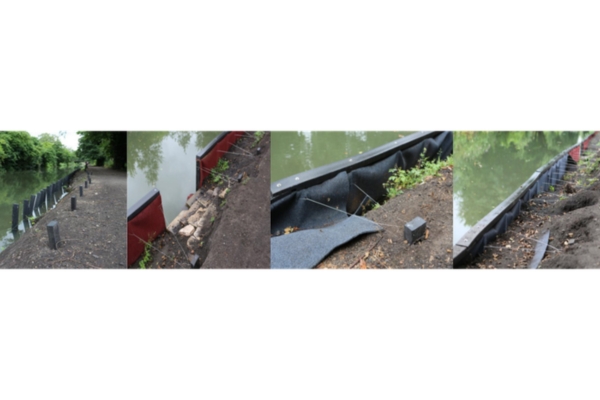
- Excavating the bank edge to create a stable, angled profile.
- Removing tree stumps, debris and masonry to prepare the site.
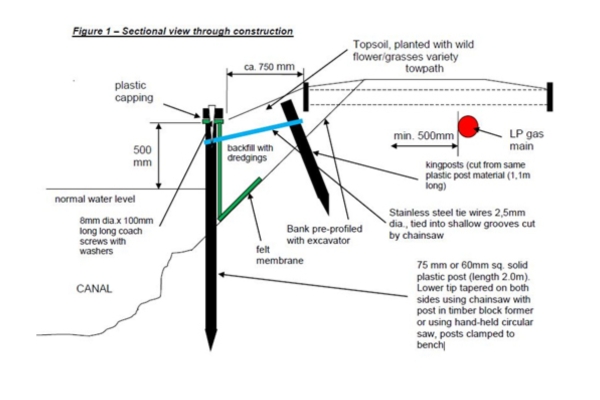
- Driving Plaswood posts (50×100mm sections in varying lengths) into the canal bed at 500mm spacing using a hydraulic piling hammer.
- Installing a felt liner, fixed with stainless‑steel screws and capped with Plaswood boards.
- Using stainless‑steel tie wires to connect canal‑side posts to angled king posts on the towpath side for structural support.
- Backfilling the void behind the liner with dredged canal material using a barge‑mounted crane.
The method provided a stable, reinforced bank profile while maintaining the towpath’s alignment and appearance.
*Recycled content percentage may vary by product specification.
The Results
The project delivered several benefits for the Cotswold Canals Trust and its partners:
- A stabilised canal bank, protecting the towpath and preventing further erosion.
- A long‑life revetment system, designed for consistent performance in wet environments.
- Reduced maintenance requirements, supporting efficient long‑term management.
- Hands‑on heritage skills training for veterans through the Heritage Heroes programme.
- A replicable approach for future restoration work across the canal network.
The Trust reported strong performance from the Plaswood posts and confirmed their suitability for additional restoration projects.
Need more information?
Our team is here to help you find the solution. Get in touch and we'll answer your questions.
